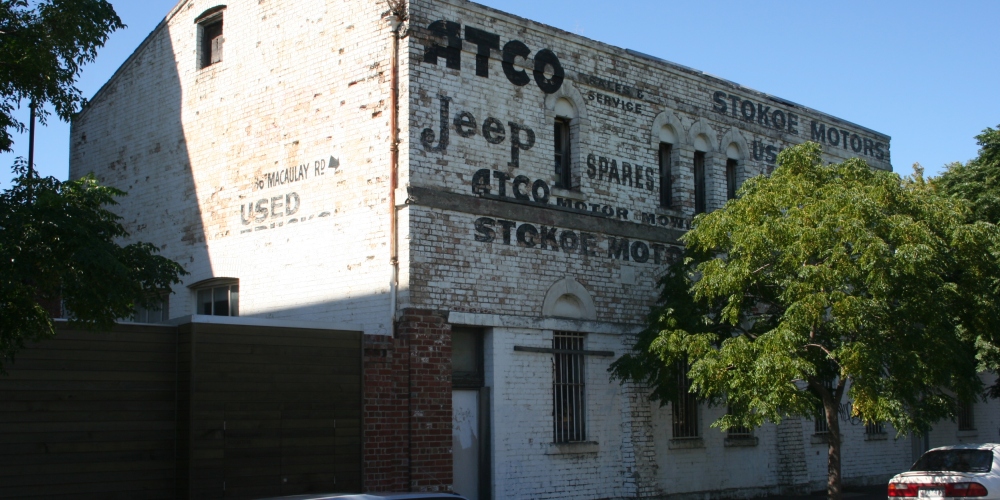
I walked from Kensington through North Melbourne on a quiet, warm Sunday in March. Melbourne is basically a Victorian city and when you look around this part of town there are many reminders of its industrial history, including some fine buildings of the practical rather than ornate variety. Continue reading
Functional fancy Flemington
The walk continued from the intersection of Union Street and Epsom Road in Ascot Vale, heading east and south into Flemington. Flemington has a plethora of buildings of all eras, from the fading Victorian shops of Racecourse Road to the rather totalitarian Melbourne Gateway created in the 1990s. But two starkly contrasting bits of architecture particularly interested me as I walked through it. Continue reading
A short poem about ghostsigns
Because you can walk through walls
And saw yourself in half
Because you are the guest who never left
the face we can’t remember
and the name on the tip of our tongue Continue reading
The Temperance Triangle and the six o’clock swill
Throughout the Melbourne suburbs you can see old signs and buildings that refer back to one of the most powerful social movements of the 19th and early 20th centuries: the temperance advocates. They regarded alcohol as a social evil and sought to have it banned entirely, or at least the consumption drastically reduced. This crossed my mind as I walked south from Moonee Ponds into Ascot Vale, entering ‘The Temperance Triangle’. Continue reading
Fading signs in Moonee Ponds
A definition of the vague term ‘psychogeography’ is “the study of the specific effects of the geographical environment … on the emotions and behaviour of individuals”.
One way of exploring the psychogeography of a city or suburb is to simply drift through it, trying to sense the moments when the atmosphere changes and your mood alters correspondingly.
I felt such a shift as I walked along Holmes Road, Moonee Ponds. It was around the moment when I spotted the signage for the Chinese restaurant. The words ‘Eat Here or Take Away’, shaped out of some soft and impermanent substance, looked as if they had been half eaten themselves. Continue reading